History of Our Lady of the Annunciation
In the 1880s, waves of immigrants from Syria and Lebanon began settling in Boston's South End, drawn by the promise of opportunity in a growing American city. Among them were Melkite families, faithful to the Byzantine tradition of Antioch in full communion with Rome, who at first had no priest of their own and relied on the goodwill of Boston's Latin and Syrian clergy for the sacraments.
That changed in 1906, when Patriarch Cyril IX Moghabghab of Zahle, Lebanon visited Boston and met with the Melkite community. Two years later, in 1908, a small church was founded on Harrison Avenue — the first true home for Boston's Melkites — under the guidance of its first pastor, Rev. Nicholas Gannam. On June 27, 1910, the little church was consecrated by His Eminence William Cardinal O'Connell, Archbishop of Boston, as the Melkite Church of Our Lady of the Annunciation.
For decades that modest church served a community composed largely of hardworking immigrant families. Fr. Peter Abouzeid, who succeeded Fr. Gannam in 1926, devoted his pastorate to paying off the church's mortgage. When he was transferred to Lawrence in 1933, the young Fr. Flavien Zahar arrived to a parish that had, by then, outgrown its building. Sensing both the need and the opportunity, Fr. Zahar and a newly organized Building Committee spent eight years planning and constructing a larger church on Warren Avenue. On May 3, 1942, Msgr. Michael J. Splaine — the same priest who had attended the little church's consecration thirty-two years earlier — was sent by Cardinal O'Connell to consecrate the new one.
[object Object]
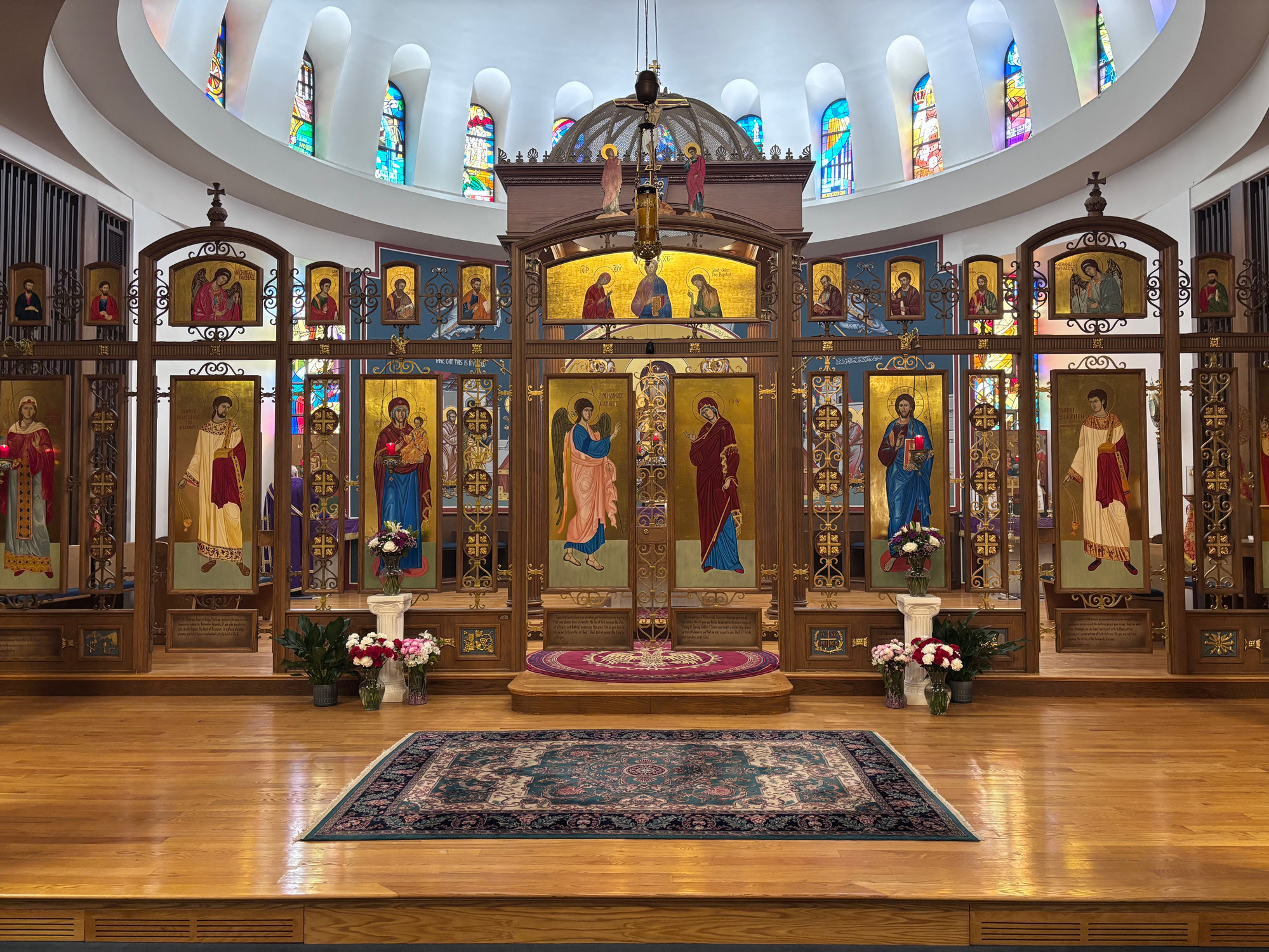
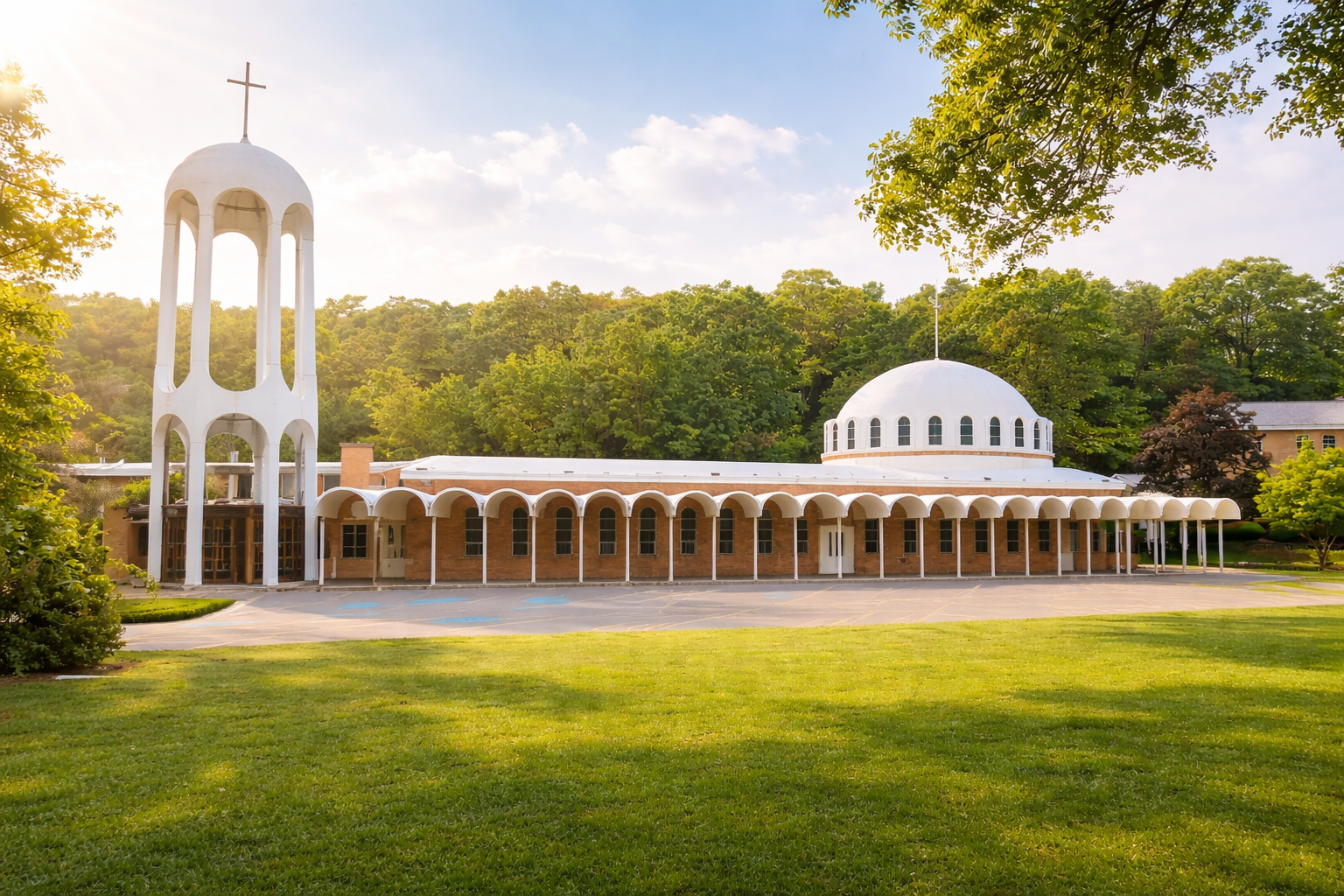
The timing was significant. In 1976, the Vatican established the Eparchy of Newton, an independent diocese for Melkite Catholics across the United States, with Bishop Justin Najmy as its first hierarch. The new church on the Charles River Parkway became more than a parish home — it became the Mother Church of the Melkites in America, seat of the newly formed Eparchy.
[object Object]
That spirit of hospitality and care has always run alongside the building projects and the parish records. Even in the leanest years, the community found ways to give — supporting Emmaus House, Covenant House, and other Melkite parishes and missions further afield, while opening its doors to weekend carnivals, feast day haflis, and the yearly Lenten Charity Supper that has fed the poor of Boston for decades. Choirs have sung, Sunday School classes have filled the lower hall, and newsletters like Joyful Light have kept far-flung families connected to the parish that first took root on Harrison Avenue. It is this rhythm of worship, work, and welcome — sustained by pastor after pastor and generation after generation — that has carried the Melkite community of Boston from a small storefront church to its place today as Mother Church of the Eparchy of Newton.
“that all may be one”
Through it all, the community has held fast to the words that mark so many milestones in its history — the prayer, echoed across generations of pastors and parishioners alike, "that all may be one."
Adapted from the parish's 1998 history, "Annunciation Melkite Cathedral: A History, 1908–1998."
Milestones of Faith
-
1906Patriarch Cyril IX Moghabghab visits Boston's Melkite community
-
1908A small church is founded on Harrison Avenue under Rev. Nicholas Gannam
-
1910Consecrated by William Cardinal O'Connell as Our Lady of the Annunciation
-
1942A larger church on Warren Avenue is consecrated
-
1968Land is purchased along the Charles River Parkway in West Roxbury
-
1976The Vatican establishes the Eparchy of Newton
-
1978The Cathedral is completed and dedicated on January 15
Frequently Asked Questions
Frequently asked questions
What should I expect when I visit for the first time?
You will find a prayerful and reverent service filled with chanting, incense, and sacred imagery. Much of the liturgy is sung, and the congregation participates throughout. Do not feel pressure to follow everything—simply pray and observe.
Is there a dress code?
We encourage modest and respectful attire, as one would wear when coming before the Lord. Beyond that, you are welcome as you are.
Do I need to be a member to attend?
No. All are welcome to attend and pray with us.
How is the Divine Liturgy different from the Roman Catholic Mass?
The Divine Liturgy is longer and more fully sung, with a strong emphasis on mystery, symbolism, and participation. While the structure differs, it is the same Eucharistic sacrifice offered in the Catholic Church.
Why is everything sung or chanted?
In our tradition, prayer is naturally expressed through chant. Singing helps lift the heart and mind to God and reflects the worship of heaven.
Why do Melkites make the sign of the cross differently?
In the Byzantine tradition, we make the sign of the cross from right to left. This is simply a different custom expressing the same faith.
Why is there so much incense?
Incense is a sign of reverence and symbolizes our prayers rising to God. It also reminds us that we are entering into a sacred and heavenly reality.
Who can receive Holy Communion?
Holy Communion is reserved for baptized and practicing Catholics who are properly prepared. If you are unsure, it is best to speak with the priest beforehand.
How do I receive the Eucharist?
In our tradition, Holy Communion is given under both species (Body and Blood) together, by mouth (not by hand). Simply approach, tilt your head back slightly, and receive reverently.
Do I need to go to Confession before receiving?
If you are conscious of serious sin, you should receive the Sacrament of Confession before approaching Holy Communion, as is the practice throughout the Catholic Church.
Can non-Catholics receive Communion?
No. We ask that those who are not in full communion refrain from receiving, but you are most welcome to come forward for a blessing.
Why do people stand so much during the liturgy?
Standing is a traditional posture of prayer and attentiveness, especially on Sundays, which are days of resurrection and joy.
What language is used in the liturgy?
The liturgy is typically celebrated in English, though you may also hear Arabic or Greek, reflecting our heritage.
What is the Melkite Catholic Church?
The Melkite Catholic Church is one of the Eastern Catholic Churches in full communion with the Catholic Church and the Bishop of Rome. Our roots are in the ancient Church of Antioch, and we follow the Byzantine tradition in our worship, theology, and spirituality.
Are you Orthodox or Catholic?
The word “Melkite” comes from a Semitic word meaning “of the King.” It originally referred to Christians who remained faithful to the Emperor and the teachings of the universal Church after the Council of Chalcedon in 451.
What is the Byzantine Rite?
The Byzantine Rite is the form of worship and spiritual life that developed in the Christian East, especially in Constantinople. It includes the Divine Liturgy, the use of chant, icons, incense, and a strong emphasis on the mystery of God.
Why are there icons instead of statues?
Icons are sacred images that help us encounter the reality they represent. They are not merely decorative—they are a “window into heaven,” guiding us into prayer.
Why do people kiss icons?
This is a sign of reverence and love, much like kissing a Bible. The honor given passes to the person depicted, not the material object.
Do Melkite Catholics follow the same beliefs as Roman Catholics?
Yes. We share the same faith and are in full communion with the Catholic Church, though we express that faith through the traditions of the Christian East.
No questions match your search. Ask the parish office →